How to Create a Cohesive Living Room Around Your Sofa
How to Create a Cohesive Living Room Around Your Sofa
The sofa is usually one of the largest items in a living room, which means it naturally influences how the rest of the space looks and works. Its size affects where people can walk, while its colour, fabric, and shape set the direction for other furniture and accessories.
Creating a cohesive room does not require every item to match. In practice, it comes from repeating a few colours, materials, or shapes so that each part of the room feels connected.
Where Should You Position the Sofa?
Begin with how the room is used rather than automatically pushing the sofa against the longest wall. Think about where people enter, where they need to walk, and what they are likely to look towards while seated.
In many homes, the sofa faces a television, fireplace, or window. Leave enough room for people to pass without squeezing between furniture. A walkway of around 75 to 90 centimetres is often comfortable, although smaller rooms may require a tighter arrangement.
In an open-plan room, the back of a sofa can help mark the edge of the living area. A console table placed behind it can strengthen this division while providing space for a lamp, books, or everyday storage.
How Can the Sofa Guide Your Colour Scheme?
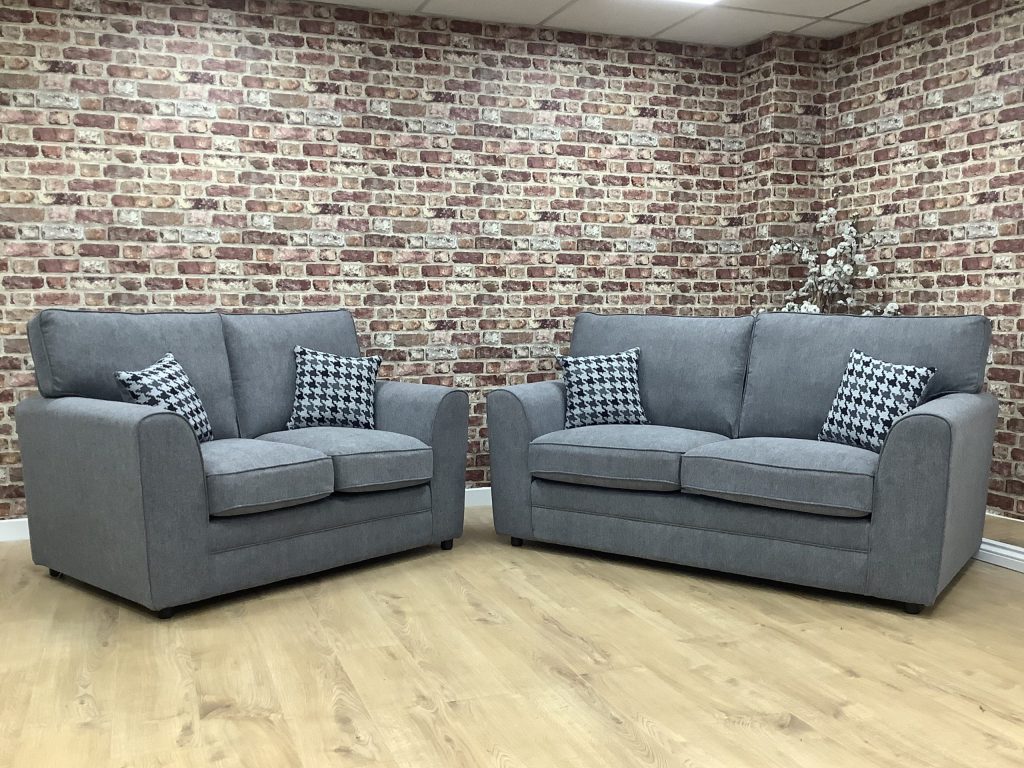
Look closely at the sofa fabric before selecting paint, curtains, or rugs. A grey sofa may contain warm brown undertones or cooler blue ones, and these small differences affect which surrounding colours sit comfortably beside it.
Choose two or three supporting colours from the sofa, flooring, artwork, or an existing feature. Repeat them in several places around the room. For example, a muted green might appear in a cushion, a framed print, and a plant pot. This repetition helps the eye move around the room without making the scheme feel overly coordinated.
A patterned sofa already contains several colours, so the surrounding accessories can pick up one or two of its quieter shades. With a plain sofa, patterned cushions or curtains can introduce more detail.
What Size Rug Works Best with a Sofa?
A rug that is too small can make the seating area look disconnected. Ideally, the front legs of the sofa and nearby chairs should sit on the rug. In a larger room, the whole seating arrangement may fit comfortably on it.
Before buying, mark out the proposed rug size on the floor with masking tape. This gives a more accurate sense of scale than estimating from measurements alone.
The rug should also relate to the shape of the room. A rectangular rug usually works well with a standard sofa, while a large square rug can help bring together a corner sofa and coffee table.
How Should You Choose Chairs and Tables?
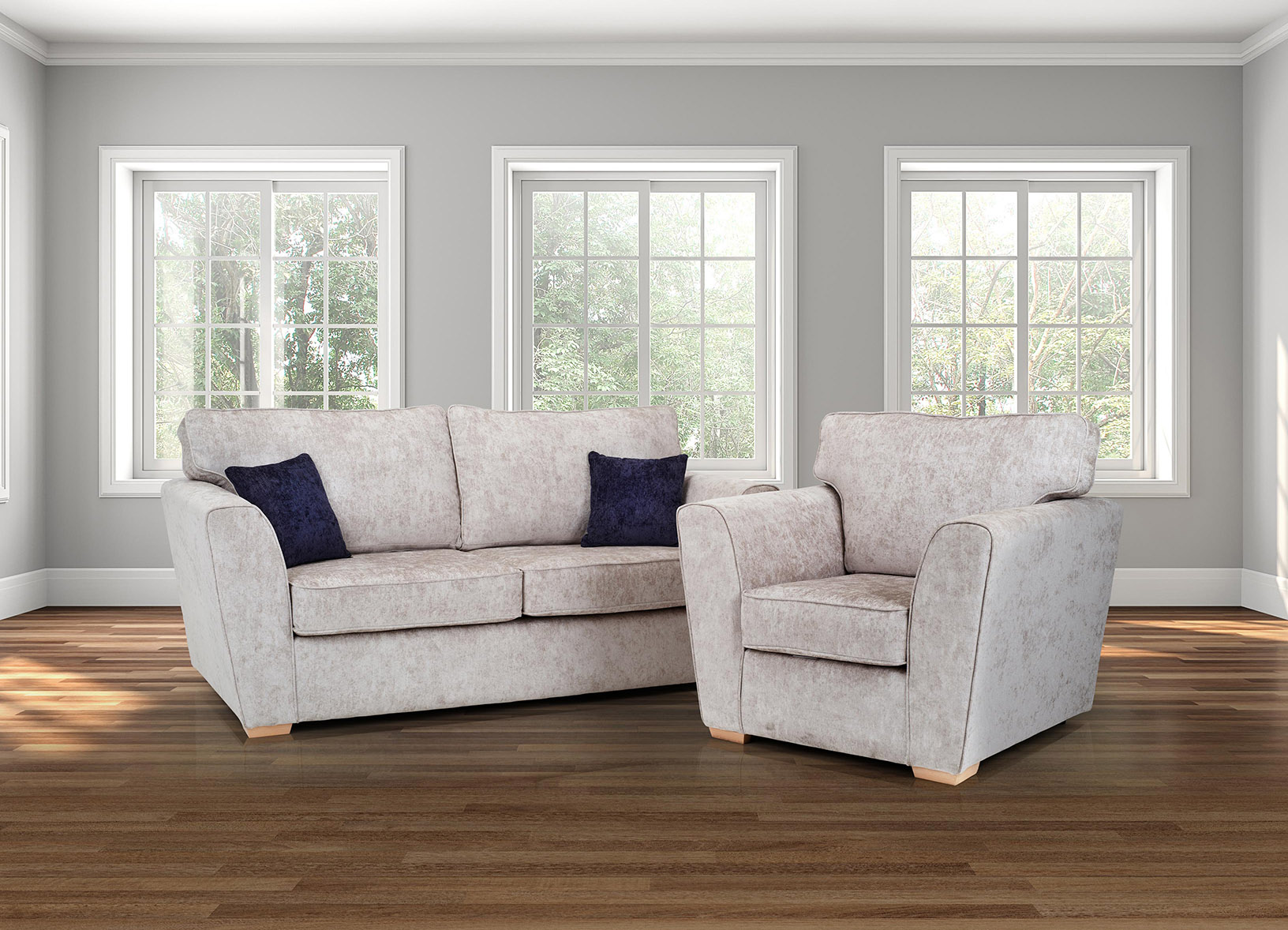
Additional furniture should suit the proportions of the sofa. A deep, low sofa can look awkward beside a small upright chair, particularly when the seat heights are noticeably different. The pieces do not need to come from the same range, although they should feel comfortable to use together.
Check that the coffee table can be reached from the main seats without stretching. Leaving approximately 40 to 45 centimetres between the sofa and table generally provides room to move while keeping drinks and remote controls within reach.
Side tables can vary in design, but repeating a material such as wood, glass or metal will help connect them.
How Can Cushions and Throws Bring the Room Together?
Cushions are an easy way to link the sofa with the rest of the room. Use a mixture of sizes and textures, then repeat colours already found in the curtains, rug or artwork.
Avoid filling every part of the sofa. People still need enough space to sit comfortably without moving a pile of cushions first. Two or three cushions on a smaller sofa may be enough, while a corner sofa can carry a larger arrangement.
A throw can introduce another texture and protect the most frequently used seat. Folding it loosely over an arm or back cushion usually looks more natural than arranging it too precisely.
How Does Lighting Affect the Finished Room?
A single ceiling light can leave the seating area feeling flat, especially during the evening. Add light at different heights with a floor lamp beside the sofa, a table lamp on a side table or wall lights behind the seating area.
Warm bulbs generally create a relaxed atmosphere, while a focused reading lamp is useful beside the seat used for books or hobbies. Check where plugs are located before settling on the final furniture arrangement, as trailing extension cables can quickly make a room feel untidy.
How Can You Keep the Room Feeling Personal?
A cohesive room should still reflect the people who use it. Photographs, inherited furniture, books, and collected objects often give a living room more character than buying every accessory at once.
Group smaller objects together rather than spreading them across every surface. A tray containing a candle, small vase and a few books will usually appear more considered and will be easier to move when the table is needed.
The finished room should support everyday habits. When the sofa is comfortable, the walkways are clear and useful items are within reach, the living room is more likely to remain welcoming long after it has been decorated.
To find your perfect sofa, browse our complete sofa collection at Oakland Furnishings.
FAQs
Does My Sofa Need to Match My Armchairs?
No. Different designs can work well together when they share a colour, fabric texture, wood finish or similar proportions.
Should a Sofa Always Sit Against a Wall?
A sofa can sit away from the wall when there is enough room. This can improve movement through the space or help divide an open-plan layout.
How Many Colours Should a Living Room Include?
Two or three main colours are often manageable, with smaller accents added through artwork, cushions and decorative objects.
Should the Curtains Match the Sofa?
They do not need to match exactly. Choosing curtains that repeat an undertone or supporting colour from the sofa usually creates a more relaxed result.
What Should I Choose First, the Sofa or the Rug?
Start with the item that is hardest or most expensive to replace. In many rooms, this will be the sofa, with the rug selected afterwards to suit its size and colour.